
 Image 1 of 5
 Image 2 of 5
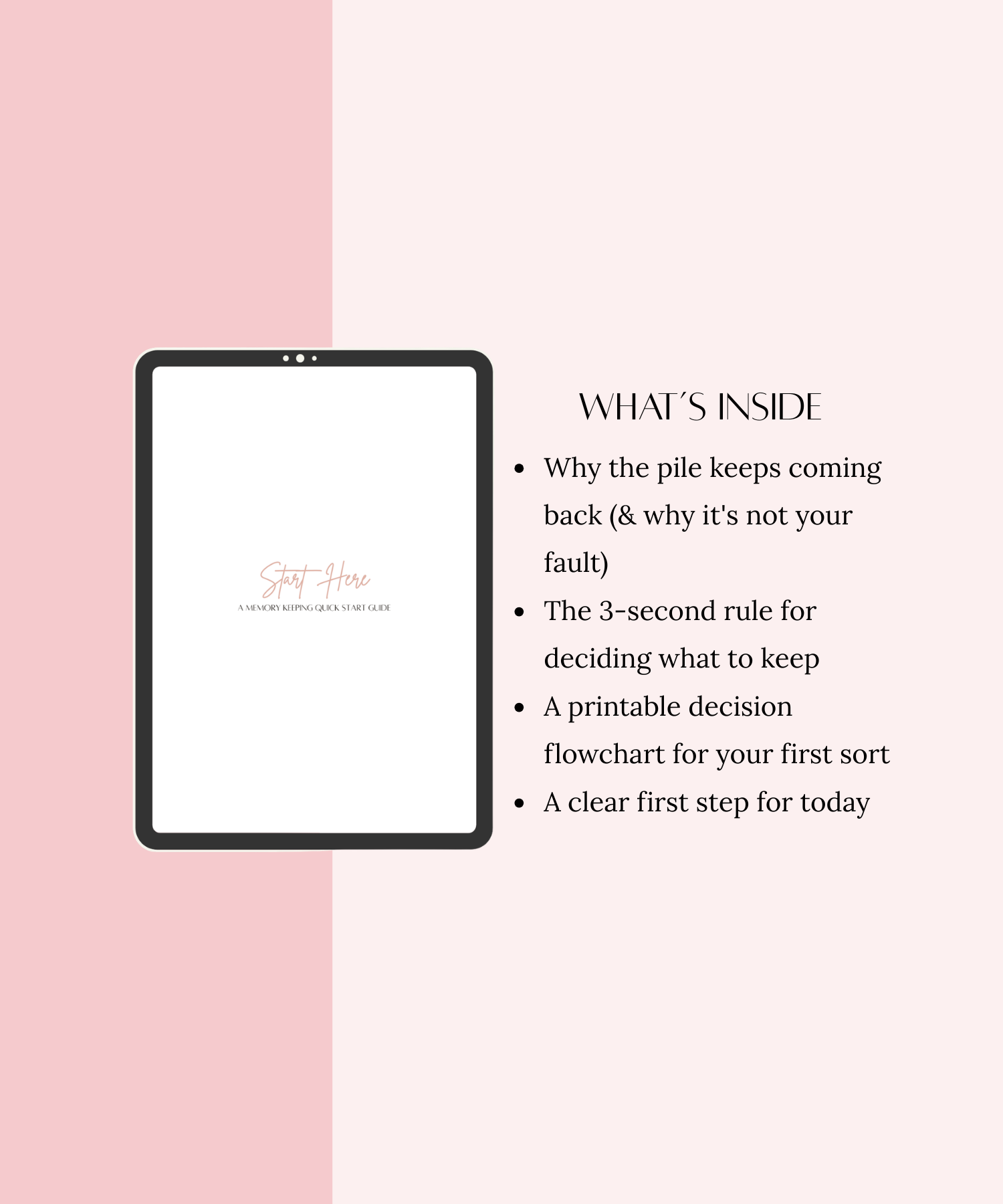 Image 3 of 5
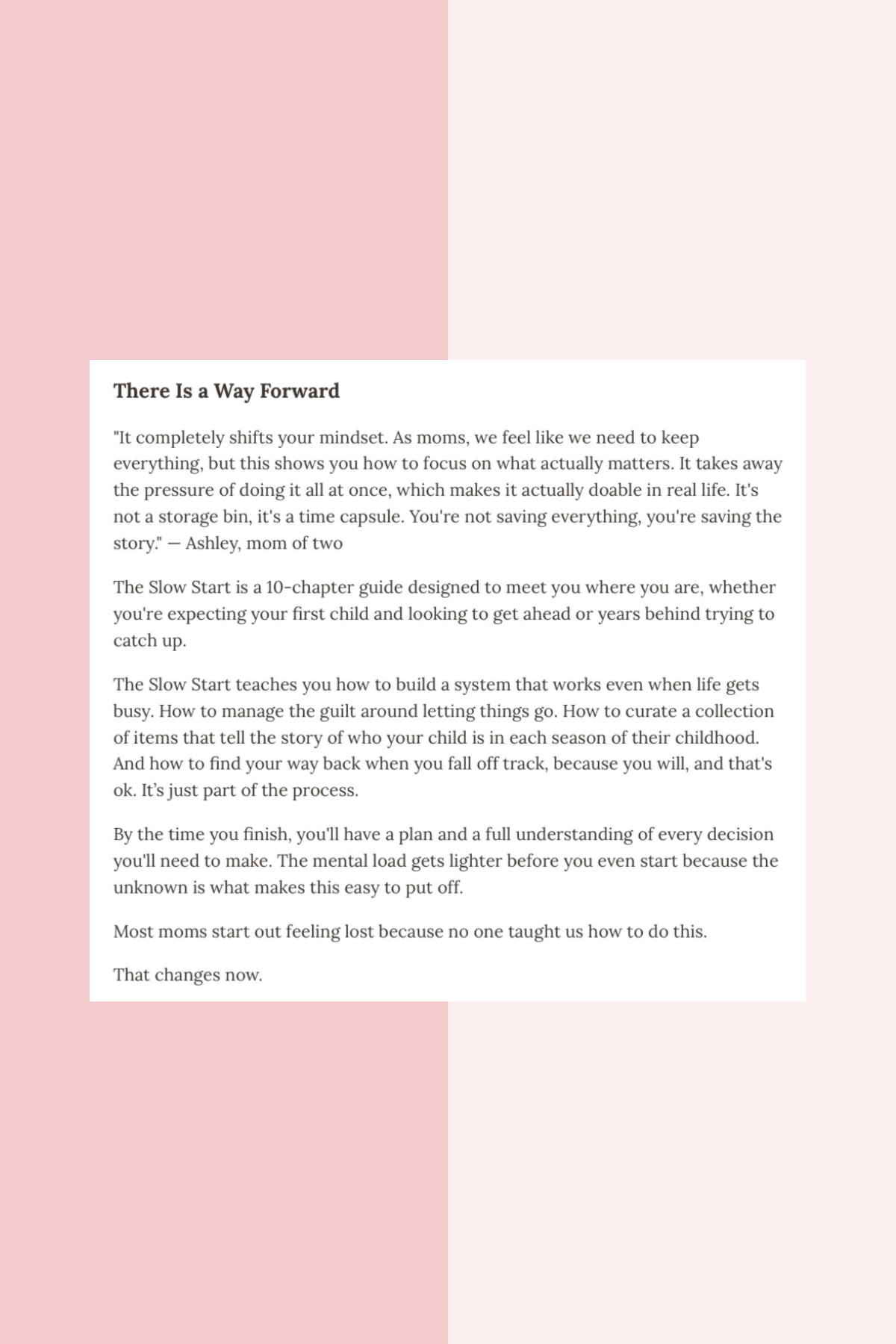 Image 4 of 5
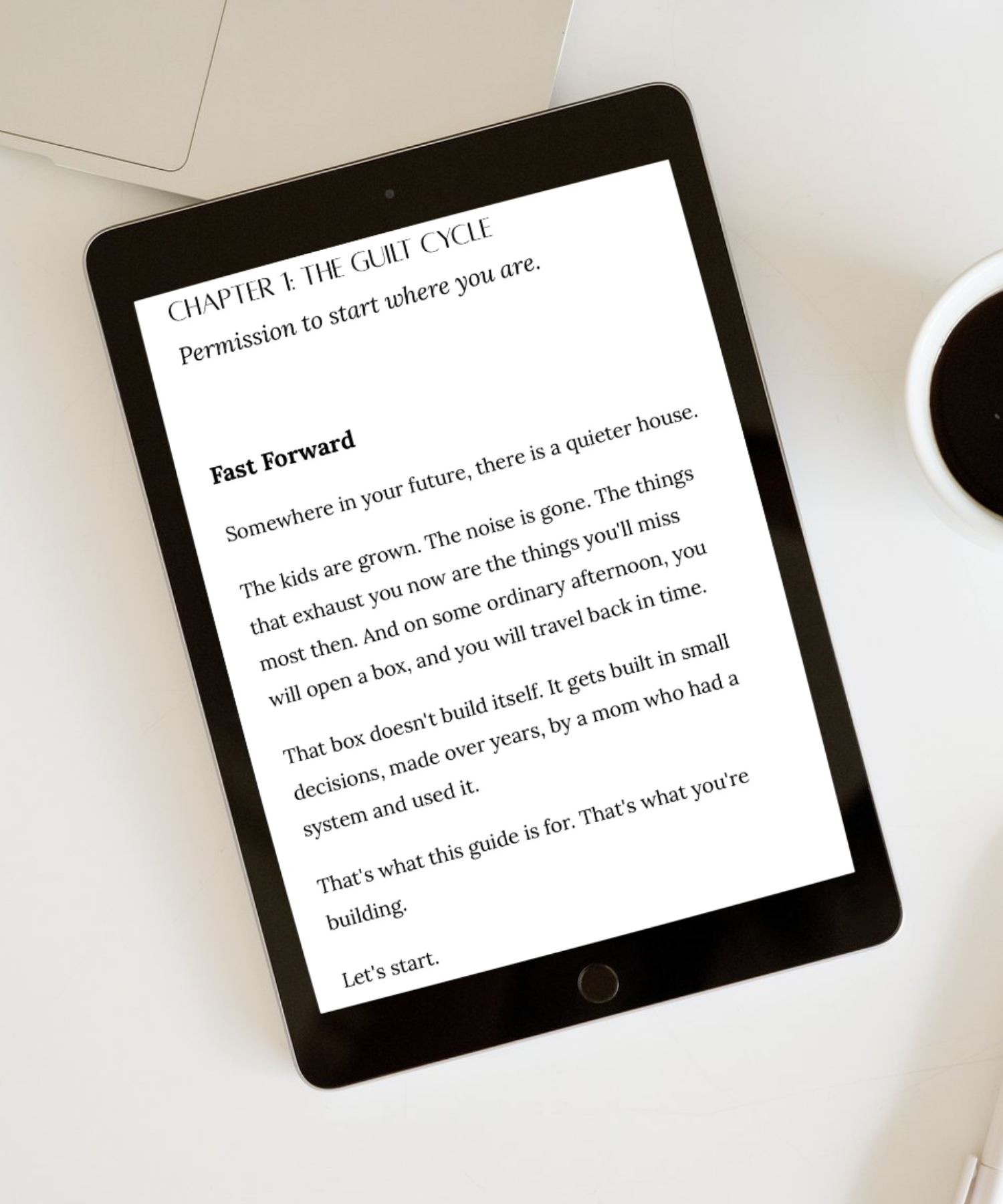 Image 5 of 5
I failed miserably at this before I got it right. I hope this helps you skip feeling like a failure and go straight to saving what matters.
If you're like me, you've dropped piles of artwork in the trash can. Or you're like my mom, who has approximately 100 photo albums from my childhood and saved everything I touched as a kid.
Either way, this guide meets you where you are.
The Slow Start is a 10 chapter guide you'll actually finish. Built for the mom who's behind, overwhelmed, or starting from nothing. This system starts where you are. Because that's the only place you can start.
Each chapter builds on the one before it.
What you'll learn.
Chapter 1: How to stop carrying guilt about the pile and start where you actually are.
Chapter 2: How to identify the real reason you're stuck and why it has nothing to do with how much you love your kids.
Chapter 3: How to tackle a backlog that's been sitting for years without losing a Saturday.
Chapter 4: How to decide what's worth keeping in 3 seconds, and what to do with the items you can't call.
Chapter 5: How to let the system make the hard decisions so you don't have to.
Chapter 6: How to set up a catch all so paper coming in the door has a home in under 60 seconds.
Chapter 7: How to run a curation session in 15 to 25 minutes, never longer, and walk away feeling good about every choice.
Chapter 8: How to run the same system for more than one child without doubling your workload.
Chapter 9: How to come back after falling behind without starting over.
Chapter 10: How to keep going, and why it was always worth it.
What's inside.
10 chapters. Reflection questions at the end of every one. A before snapshot you fill out on page 2 and return to when you're done.
The guarantee.
Work through The Slow Start. If it doesn't change how you think about memory keeping, email me at nicole@mindfulmodernpaperco.com and get every dollar back.
PS — Slow doesn't mean this takes forever. It means you have to slow your brain down for a moment to do this the right way. The guide walks you through every obstacle, mental and physical, step by step.
“It completely shifts your mindset. As moms, we feel like we need to keep everything, but this shows you how to focus on what actually matters. It takes away the pressure of doing it all at once, which makes it actually doable in real life. It's not a storage bin, it's a time capsule. You're not saving everything, you're saving the story.”
— Ashley, mom of two
I failed miserably at this before I got it right. I hope this helps you skip feeling like a failure and go straight to saving what matters.
If you're like me, you've dropped piles of artwork in the trash can. Or you're like my mom, who has approximately 100 photo albums from my childhood and saved everything I touched as a kid.
Either way, this guide meets you where you are.
The Slow Start is a 10 chapter guide you'll actually finish. Built for the mom who's behind, overwhelmed, or starting from nothing. This system starts where you are. Because that's the only place you can start.
Each chapter builds on the one before it.
What you'll learn.
Chapter 1: How to stop carrying guilt about the pile and start where you actually are.
Chapter 2: How to identify the real reason you're stuck and why it has nothing to do with how much you love your kids.
Chapter 3: How to tackle a backlog that's been sitting for years without losing a Saturday.
Chapter 4: How to decide what's worth keeping in 3 seconds, and what to do with the items you can't call.
Chapter 5: How to let the system make the hard decisions so you don't have to.
Chapter 6: How to set up a catch all so paper coming in the door has a home in under 60 seconds.
Chapter 7: How to run a curation session in 15 to 25 minutes, never longer, and walk away feeling good about every choice.
Chapter 8: How to run the same system for more than one child without doubling your workload.
Chapter 9: How to come back after falling behind without starting over.
Chapter 10: How to keep going, and why it was always worth it.
What's inside.
10 chapters. Reflection questions at the end of every one. A before snapshot you fill out on page 2 and return to when you're done.
The guarantee.
Work through The Slow Start. If it doesn't change how you think about memory keeping, email me at nicole@mindfulmodernpaperco.com and get every dollar back.
PS — Slow doesn't mean this takes forever. It means you have to slow your brain down for a moment to do this the right way. The guide walks you through every obstacle, mental and physical, step by step.
“It completely shifts your mindset. As moms, we feel like we need to keep everything, but this shows you how to focus on what actually matters. It takes away the pressure of doing it all at once, which makes it actually doable in real life. It's not a storage bin, it's a time capsule. You're not saving everything, you're saving the story.”
— Ashley, mom of two